 Login
Login
Christopher Walther
-
Posted: March 26, 2026Categories: Test Tube
 Read more »
Have you ever started a lab procedure and paused for a moment because the tube in your hand didn’t seem right for the experiment? In many laboratories, small choices like this can affect accuracy, safety, and the reliability of the final result.
Test tubes may look simple. However, every experiment depends on selecting the correct material, size, and design for the conditions involved. When you use the wrong tube, samples can react automatically. Moreover, your measurements may become unreliable, and you may lose valuable time repeating the procedure.
In a professional research or clinical environment, selecting the test tube is not a routine step. It’s an experimental setup determining how well the sample will perform during heating, storage, mixing, or analysis.
Different studies require specific test tube materials, sealing methods, and tolerance levels. Therefore, random guessing can lead to an inconsistent outcome.
To avoid these complexities, you need a clear understanding of the
-
Posted: February 25, 2026
 Read more »
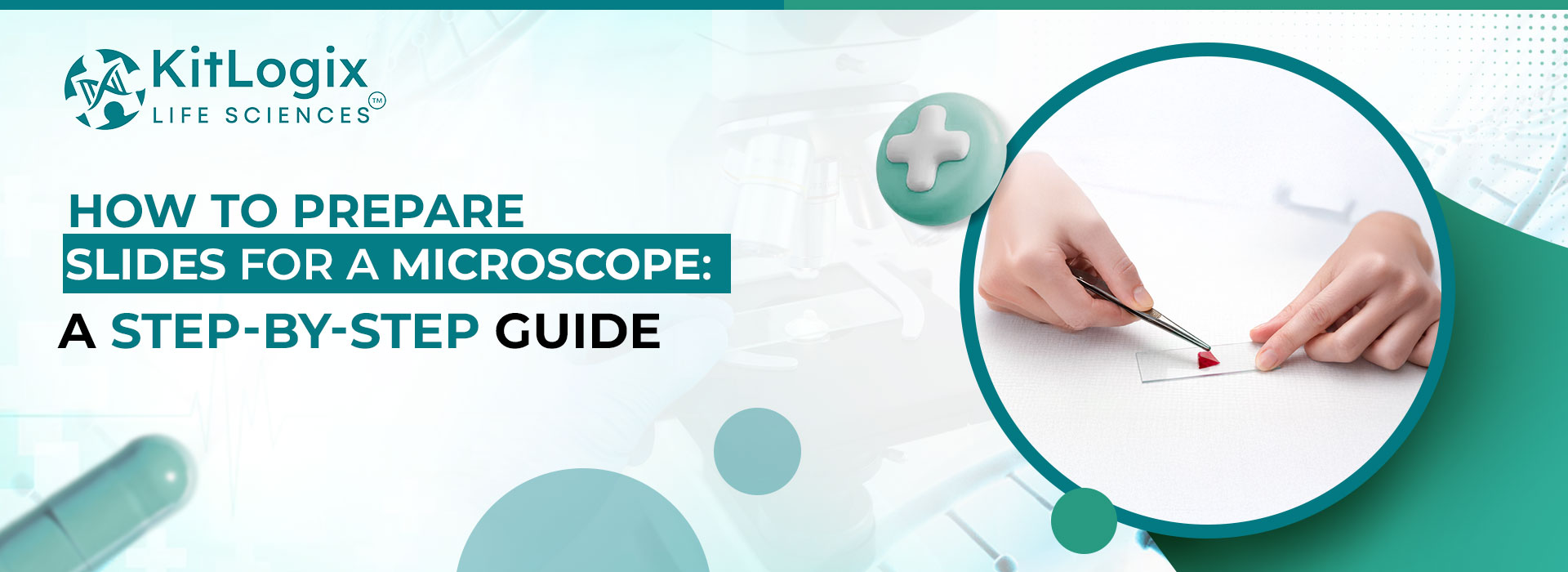
Sitting there with a microscope in front of you and no idea how to prepare a slide? Don't worry, it is a common problem. Air bubbles, damaged specimens, and unfocused images are a headache for any amateur microscopist.
Using ready-made slides can be expensive and restrict your sampling. Without learning how to prepare a microscope slide, you will never be able to investigate the world around you.
The best part? You can easily learn how to prepare a slide properly. There is no need for a ton of equipment or a master's in science. This guide will teach you how to prepare glass microscope slides using methods that anyone can learn and perform!
No matter if you're working with pond water, plant cells, or fabric fibers, you'll learn four tried-and-true methods for preparing microscope slides. In the end, you will be able to prepare wet-mount, dry-mount, and smear slide preparations like a pro. This guide will help you in the proper preparation of slides and coverslips for microscopy.
Let us