 Login
Login
How to Prepare Slides for a Microscope: A Step-By-Step Guide


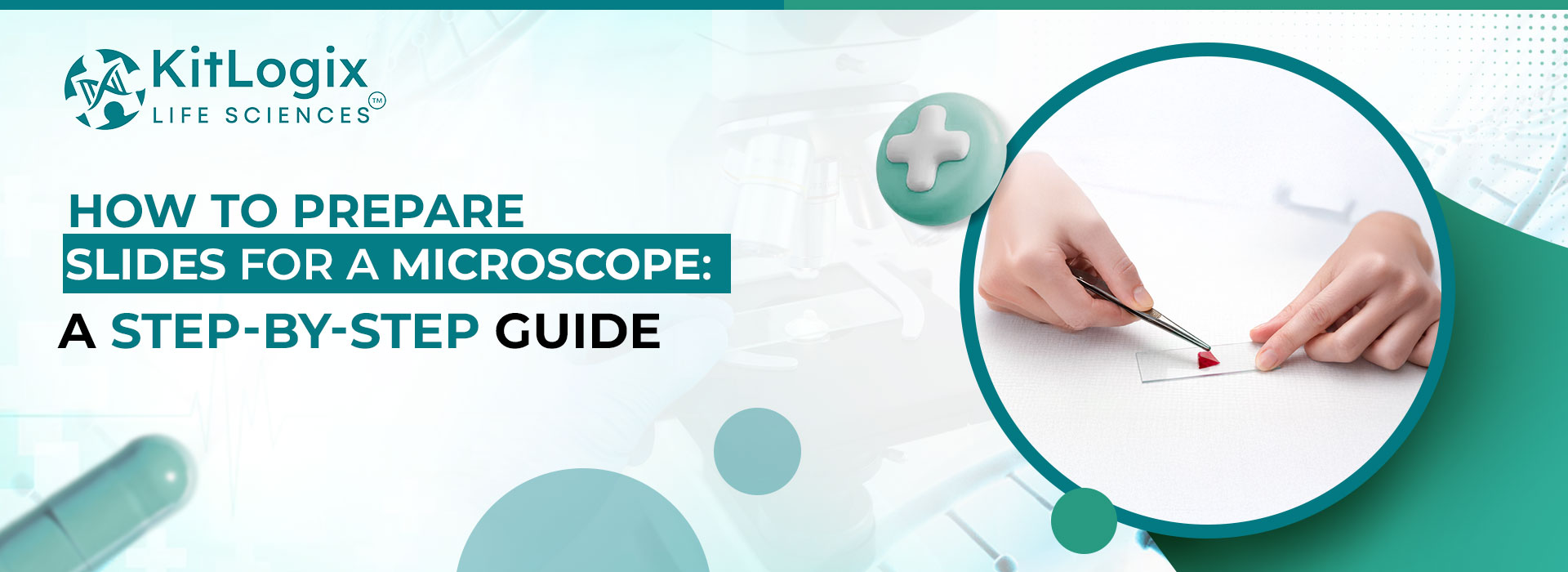
Sitting there with a microscope in front of you and no idea how to prepare a slide? Don't worry, it is a common problem. Air bubbles, damaged specimens, and unfocused images are a headache for any amateur microscopist.
Using ready-made slides can be expensive and restrict your sampling. Without learning how to prepare a microscope slide, you will never be able to investigate the world around you.
The best part? You can easily learn how to prepare a slide properly. There is no need for a ton of equipment or a master's in science. This guide will teach you how to prepare glass microscope slides using methods that anyone can learn and perform!
No matter if you're working with pond water, plant cells, or fabric fibers, you'll learn four tried-and-true methods for preparing microscope slides. In the end, you will be able to prepare wet-mount, dry-mount, and smear slide preparations like a pro. This guide will help you in the proper preparation of slides and coverslips for microscopy.
Let us transform your frustrations with microscopy into adventures in discovery.
What Are Microscope Slides?
Thin, flat glass is used to prepare samples to view under a microscope. Standard microscope slides are approximately 75 mm long, 25 mm wide, and 1 mm thick. Scientists, researchers, and hobbyists can study specimens using slides.
Using glass slides gives light traveling upward into the microscope an open, visible path, enlarging the subject. Most ordinary microscope slides are made for compound and biological microscopes.
Properly prepared microscope slides are easy to store, keep, and study in the future. They are a good way to record a sample and are usually guaranteed to remain useful for many years.
Types of Microscope Slides
The various types of glass microscope slides each have their own uses. Knowing these allows you to select the appropriate slides for your own preparations.
Glass Microscope Slides
The most widely used are standard glass microscope slides. Their two surfaces are smooth and flat. Standard glass slides can be used to prepare dry-mount, wet-mount, and smear slides. They are cheap to buy and can be obtained in bulk from suppliers.
Glass slides are robust and can be reused many times. After preparing a slide, it can be cleaned with soap and water and reused. Glass slides provide very good image clarity for most microscopy work.
Prepared Slides
Prepared slides have specimens already mounted, stained, and sealed. These slides are produced in official labs by professional scientists. The slides illustrate various examples, such as onion cells, bacteria, and insect parts.
The prepared slides provide basic knowledge for preparing microscopical slides. They serve as a time-saving option when quick observation is needed. Most prepared slides can last for decades when used correctly.
Concavity Slides
The concavity slides have a slight indentation or well in the middle. Liquids are kept from spilling during their preparation. The well helps secure liquid samples.
Concave slides are better suited to large drops of liquid and are very useful for examining aquatic organisms. The concavity slides are slightly more expensive than flat slides.
Frosted Slides
Frosted slides are prepared with a rough, matte finish on one or both ends. This surface allows you to write labels directly on the slides with a pencil or pen. The marks will not smear or erase.
Frosted glass is used to reduce glare and increase the contrast of transparent specimens.
Charged Slides
Charged slides are treated with a unique positive chemical coating on their surfaces. This electrostatic charge strongly adheres tissue sections and cell preparations to the glass. Staining, washing, or any step in the protocol is unlikely to dislodge your specimen.
They are used in histology, pathology, and clinical research, where it is crucial not to lose specimens, especially since a dislodged specimen means all of your work, perhaps hours of preparation, is in vain. The charged slide is effectively sticking the specimen to the glass, making them indispensable for diagnostic, precision laboratory work.
What Are the Methods of Slide Preparation?
Let's know the different types of slide preparation methods included in this process. There are four primary methods of preparing slides to produce a microscope specimen. Different specimen types require different slide preparation techniques. Knowing how to mount slides correctly is essential.
Dry Mount
Dry-mount slide preparation is the simplest method. You place dry specimens directly on clean glass microscope slides. Examples include hair, feathers, pollen, and thin-fibered fabric.
This microscope slide preparation technique requires no liquid. You can add a coverslip for protection. However, dry mount slides produce lower image quality than wet preparations.
Wet Mount
Learn how to prepare a wet mount slide. A wet mount slide is one with specimens immersed in water or another liquid medium. This slide-preparation method is useful for viewing living organisms, plant cells, and soft tissues. The liquid supports the specimen without distorting its natural appearance.
Scientists refer to wet-mount slides as "temporary mounts." This is because the liquid evaporates fairly rapidly. An average wet mount lasts between 10 and 30 minutes. Sealing the edges of the coverslip with petroleum jelly can prolong the life of a wet mount.
Smear Mount
Smear slides disperse fluid specimens in a thin layer onto glass microscope slides. Smear preparation is commonly used for blood specimens, bacteria, and cultures in the lab. A thin layer yields clean, detailed images.
Allow smear specimens to air dry before observing. For many specimens, it is necessary to fix and stain. This type of microscope slide preparation provides superior structural detail of cells.
Squash Mount
Squash mounts the press plant tissue between the microscope slide and the coverslip. This type of slide preparation can be used with plant anthers, root tips, and other soft plant materials. Squashing separates cells and forms thin sheets.
Position plant specimens on glass slides with mounting medium, then place a coverslip on top. Using your thumb, press down hard on the coverslip over a paper towel to flatten tissue without harming the specimen. The squash mount can identify the structure of chromosomes and their division process.
Step-by-Step Guide on Microscope Slide Preparation
With a clear understanding of how to prepare microscope slides, let us now proceed to apply what we have learned. Here are the precise microscope slide preparation steps to make your very first set of microscope slides. They build on one another by simply following the fundamentals to create professional-quality slides.
Take your time, don't worry about messing up, and don't doubt yourself! Every scientist began just as you have.
Step 1: Materials Required for Microscope Slide Preparation
Get everything you need before you prepare your microscope slide. You need:
-
Clean glass microscope slides
-
Cover slips (small square pieces of thin glass)
-
Dropper or pipette
-
Specimen sample
-
Stain solution (if required)
-
Forceps or tweezers
-
Blotting paper or paper towel
-
Distilled water
All glass microscope slides and coverslips need to be clean and dust-free. Dirty slides give off poor-quality images. Remove all fingerprints and smudges from the slide before preparation begins.
Always wear eye protection when working with stains and biological materials. Chemicals used can irritate the eyes and skin. Have a clean, well-lit workspace to ensure effective slide preparation.
Step 2: Preparing the Slide (Mounting Techniques)
The type of specimen determines the way you prepare the microscope slide. Use the following procedures for each method:
Dry Mount Preparation
Begin making the dry-mount slide on a clean and dry surface. Carefully position your specimen in the center of the glass microscope slide. Make sure it sits flat.
Add a coverslip if wanted. Take it by its edges. Gently lower it into position, avoiding any air pockets.
Wet Mount Preparation
Lay out some clean glass microscope slides. Pipette 1 drop of water onto each slide.
Put your specimen into the water droplet. The specimen should be fully immersed in the water droplet, not floating around.
Take a coverslip and hold it by the sides. Rest the coverslip against the slide at a 45-degree angle, then slowly lower it onto the water droplet. Placing a coverslip like this will reduce the chance of an air bubble forming in the wet-mount slide.
Do not press down on the coverslip once it is in place. This can damage the specimen or displace water.
Smear Mount Preparation
To prepare a smear slide from a broth culture, use 1-2 drops from a sterile pipette and place it onto a glass microscope slide. Then use a second clean slide to spread the drop into a fine, even layer.
When using a solid culture, first add a drop of sterile water or saline onto the slide. Then pick up a tiny sample of culture using a sterile inoculation loop. Mix it into the water droplet and spread it thinly.
Let the smear dry completely during microscope slide preparation. This may take between 5 and 10 minutes. Do not speed up the drying process with heat at this stage.
Once dry, the smear should be fixed to the glass microscope slide. This is usually done by heating. Pass the slide through a flame several times (heat fixation), or use chemical fixation with alcohol. Fixation attaches the cells to the glass and preserves their morphology.
Add stain if your smear slide preparation instructions suggest doing this. A coverslip is not necessarily needed in smear mounts.
Step 3: Placing the Slide under the Microscope
Place your microscope on a flat, stable surface. Make sure you have adequate light.
Hold your prepared glass microscope slide by the edges. Place it on the stage with the coverslip facing up. Center the specimen below the objective lens.
Use the stage clips to hold the slide in place.
Begin with the lowest power objective lens, usually the shortest one. Lower the objective lens until it is close to the slide while looking from the side. Do not watch through the eyepiece while lowering the objective.
Now look through the eyepiece. Slowly raise the objective lens using the coarse focus knob while looking through the eyepiece. Focus on the specimen and then use the fine adjustment knob to sharpen the image.
If you have a clear image with low power, you can change the magnification. Rotate the nosepiece to the next higher objective. Make sure that the lens does not make contact with the glass microscope slide. Adjust the image using the fine adjustment knob.
How to Study Glass Microscope Slides Properly?
Practicing proper microscopy techniques will save you equipment. Moreover, it will improve your observations. Begin observing at the lowest power; it provides a wider field of view for searching for specimens.
Move the interesting portions of your specimen to the center of the field of view before increasing the magnification. Observation areas with higher power have smaller fields of view.
Observe the gap between the objective lens and your glass slides closely. At higher powers, the objective is very close to the specimen. If you move it too far into your glass slides, you will either crack the slide or break the objective lens.
Light up each objective at the appropriate light level. Adequate lighting can cause eye strain and make it harder to see. If you have too much light on your specimen, it is washed out; if you have too little, the image will be extremely dark.
Move the glass microscope slides slowly and smoothly; you can lose the specimen if you move them too fast. If your microscope has stage adjustment knobs, use them.
Take notes or sketch images to remember important observations. Indicate the power you used to observe each specimen in your notes.
Clean your glass microscope slides after each use. Also, remove the coverslip and dispose of the biological specimen according to proper procedures. Rinse slides with soap and water, then with distilled water, and dry in air or wipe with lens paper.
Important Tips to Follow Before You Start with Microscope Slide Preparation
Skill in slide preparation begins with good technique. Here are four tips for excellent microscope slides:
-
Keep Slides and Coverslips Clean: Fingerprints, dust, and smudges ruin images. Clean glass slides using a soft, lint-free cloth or lens paper. Keep your slides in a clean, covered container when not in use.
-
Prevent Air Bubbles When Preparing Wet-Mount Slides: Dark circles under the microscope are air bubbles. They are distracting and produce low-quality images. When you lower a coverslip onto a wet-mount slide, do so at an angle. This forces any air out of the wet mount.
-
Hold Slides By The Edges Only: Oils on your fingers can stick to the surface of a glass slide. They cause dust to build up on it, interfering with light transmission. This applies to the preparation of all glass slides, whether wet or dry.
-
Adhere to Laboratory Safety Guidelines: Always wear eye protection when handling stains or live material. Wash your hands before leaving the lab. Discard used slides, especially any with biological matter on them—no eating or drinking in the lab.
Why Choose KitLogix Life Sciences for All Your Microscope Slide Needs?
Knowing how to make a slide will help you take microscopy to the next step. So these are the four techniques: dry mount, wet mount, smear, and squash. You can look at almost anything with them.
Practice on easy samples first (such as newspaper characters or onion skin). Practice preparing slides until you get it right. Positioning the coverslip and avoiding bubbles requires a bit of art. Practice makes perfect.
There are countless things we haven't yet explored in the microscopic realm. When you've figured out how to make slides, everything from pond water, leaves, fibers, to food looks amazing under the microscope!
Student or teacher, researcher or novice, the right equipment is key. Kitlogix Life Sciences offers everything you need. From high-quality glass slides and cover slips to specialized stains and all-in-one prep kits-if you need it, we’ve got it.